Feedback Form
What We (Don’t) Know About Demography: A Closed Interdisciplinary Analytics Lab on Demographic Data


During a closed expert meeting, Roksolana Avramenko, SeniorAnalyst at the Frontier Institute, presented an interdisciplinary analyticalbrief—an attempt to systematically comprehend the current situation, itsprerequisites, and a future forecast.
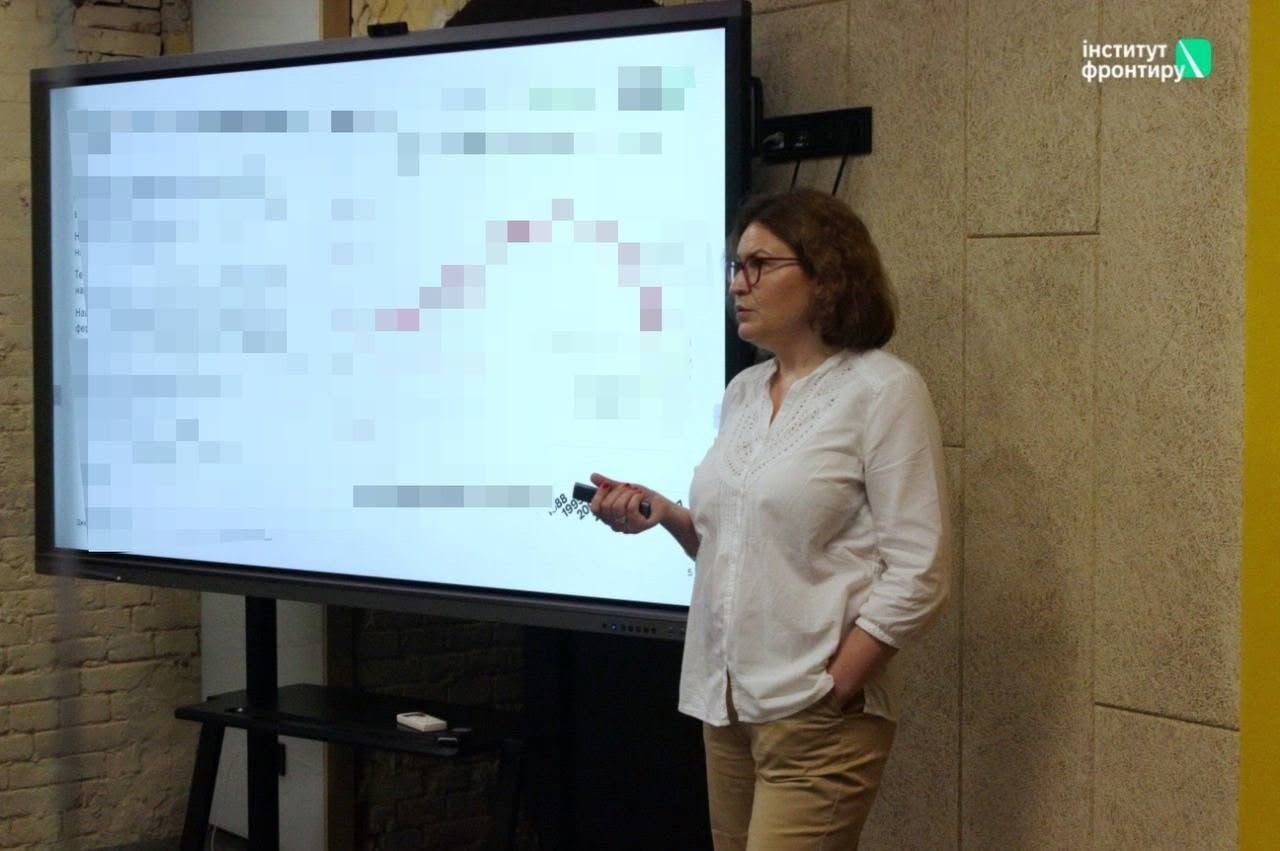
Key takeaways from the meeting:
Demographic challenges in the country emerged long before the war, which hasonly exacerbated them. Since the declaration of Independence, the birth rate inthe country has never exceeded the mortality rate—effectively making eachconsecutive generation smaller than the previous one.
The age profile of the workforce will inevitably shift toward an agingpopulation due to the scarcity of youth. By 2040, the youth population isprojected to reach a maximum of 8 million, compared to 16 million in 1991, witha portion of these young people already abroad or living under occupation.
Today, various sectorsof public life are simultaneously competing for human capital, notably themilitary and civilian employers. Women face the additional challenge ofbalancing motherhood/maternity leave with being taxpayers, alongside the needto raise children while remaining competitive players in the labor market.
Increasing the birthrate is a matter of shaping the demographic landscape with a 20-year outlook;slogans and appeals will not work here. In addition to subjective factors atthe level of personal decision-making, there is an objective trend toward decliningfemale reproductive health.
Russia is also waging war within the demographic domain. This is evidenced bothby the shelling of Ukrainian civilian infrastructure and by the enemy's actionsin the occupied territories, which are currently home to around 1.6 millionUkrainian children. Their access to higher education is being restricted, withthe military being pushed as an alternative.
Demographic policy is an integral component of the national securityarchitecture. Stabilizing human potential is vital to the effectiveness ofdefense strategies.
Thediscussion was held with the assistance of the International RenaissanceFoundation and JSC PrivatBank as part of a project supportedby the Askold and Dir Fund, administered by ISAR Ednannia within theproject «Strong CivilSociety of Ukraine — the Driver of Reforms and Democracy», funded by the governments of Norwayand Sweden