Feedback Form
Discussion «Our Own Abroad: Who Ukrainians in the World Are for the Ukrainian State and Society»


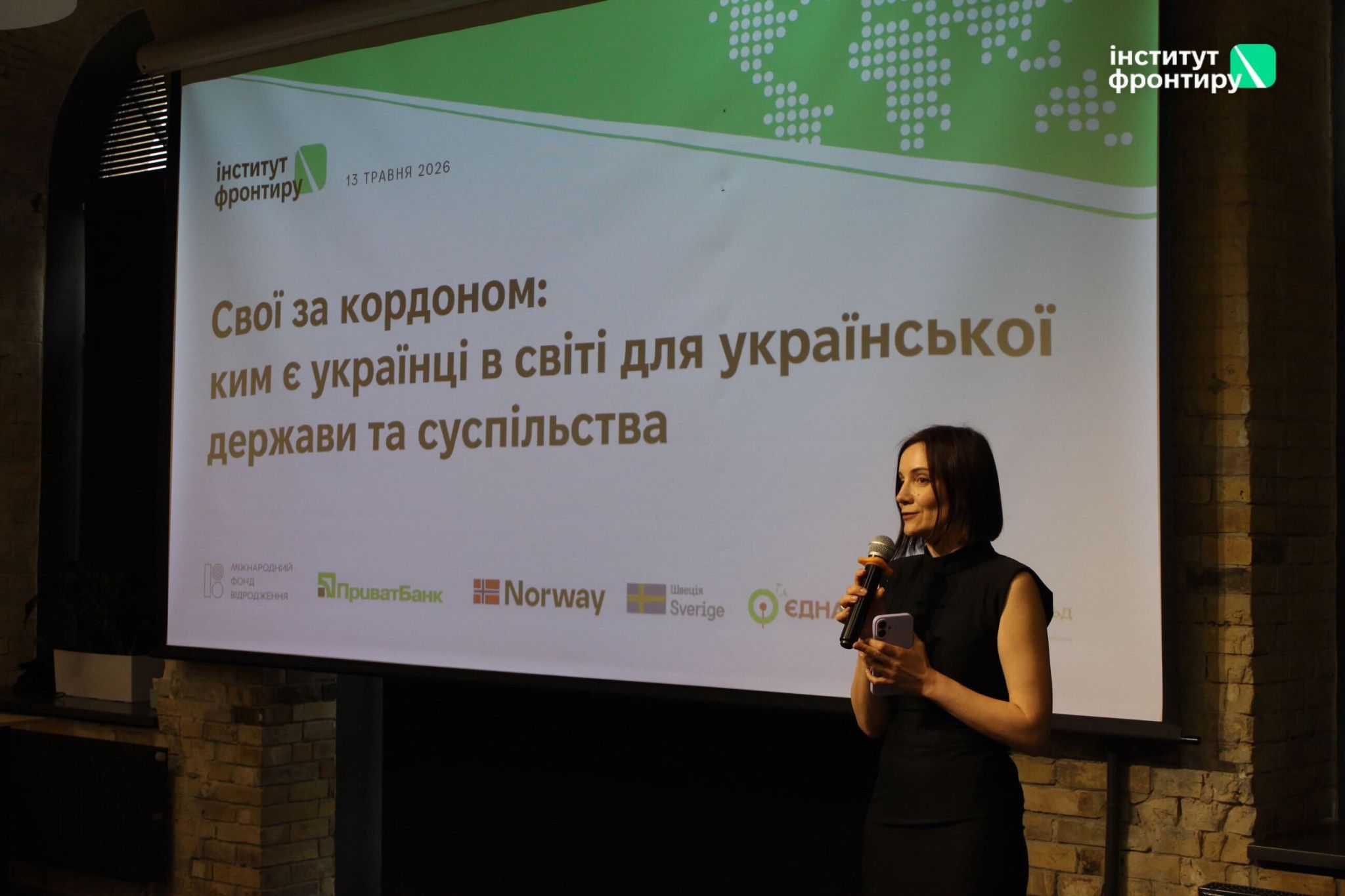
During the closed-door discussion "Our Own Abroad: Who Ukrainians in the World Are for the Ukrainian State and Society," moderated by Olha Dukhnich, Head of the Demography and Migration Program at the Frontier Institute, analysts Roksolana Avramenko and Oleksandr Matsenko presented a study on the experiences of Ireland, Croatia, and Poland. The discussion participants also addressed the challenges and opportunities for Ukraine's engagement and return policies.
Key points:
§ While the "old" diaspora saw itself asthe guardian of national identity, the new overseas community (war migrants) isonly beginning to shape its identity. They remain citizens of Ukraine andrequire a clear understanding of their role within the state.
§ In 1993, Ukraine's population reached a record52 million due to the return of people from the republics of the former USSR;however, this experience was never analyzed. Repatriation programs during thepresidency of Viktor Yushchenko also failed due to a lack of funding. Ukrainemust draw conclusions from these mistakes.
§ This is a strategic step toward maintaining tieswith both the historical diaspora and those who have left recently and plan fora long-term life abroad. It is a recognition of their dual identity (ethnic andpolitical).
§ After the war, up to 3 million people may returnto Ukraine, yet simultaneously around 2 million (including military personnel)express an intention to leave. State policy must function in a way that eventhose who depart still want to preserve their Ukrainian identity.
§ As long as there is no security in Ukraine, noreturn policies will work. However, long-term engagement policies must be putinto action right now. Despite its stable instability, Ukraine can offer uniqueconditions for self-realization and investment in the future that othercountries cannot match.
§ Recognizing overseas Ukrainians not merely as objectsof care, but as fully-fledged subjects of foreign policy, economy, anddemography is the only way to sustain our demographic resilience.
The discussion was held with the assistance of the International Renaissance Foundation and JSC PrivatBank as part of a project supported by the Askold and Dir Fund,administered by ISAR Ednannia within the project «Strong Civil Society of Ukraine — the Driver of Reforms and Democracy», funded by the governments of Norway and Sweden